A boy does not become capable by being endlessly managed. He becomes capable when someone trusts him with work that matters.
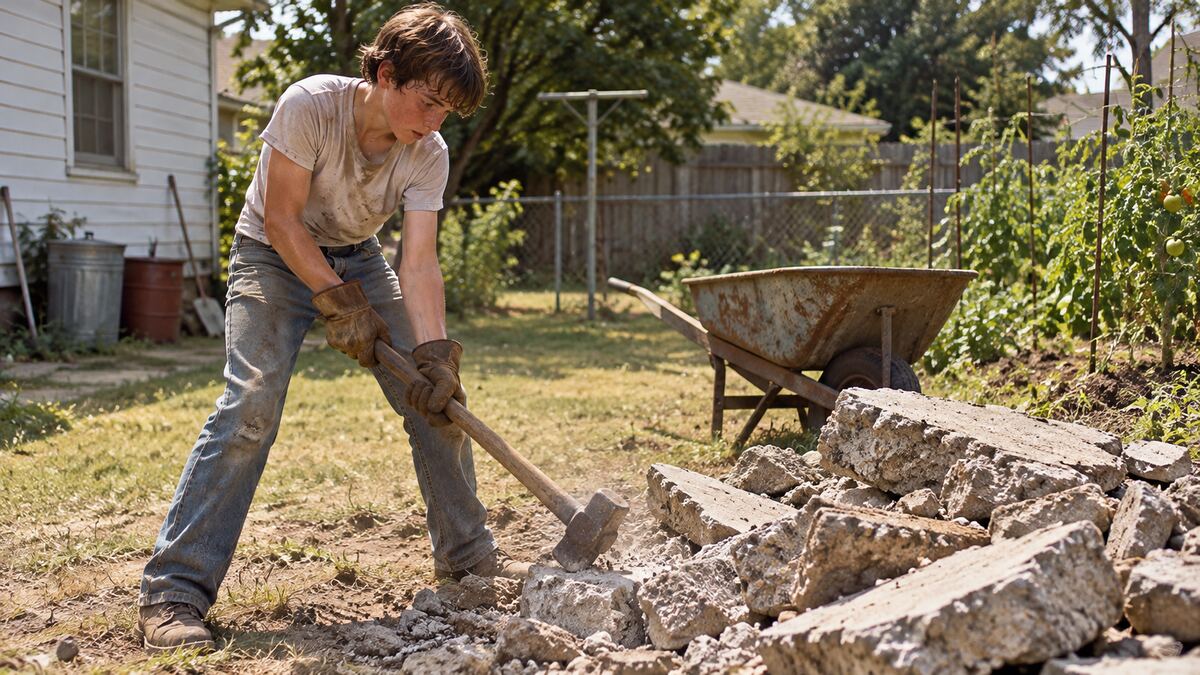
When I was thirteen, a contractor left a pile of hardened concrete in our yard. My father was leaving on a two-week trip. Before he went, he took me to the hardware store and bought me my first pair of leather work gloves. I was excited. Then he handed me a sledgehammer and gave me two weeks to break up the concrete, haul it away and dispose of it.
No one offered to pay me. No one promised an award. It was simply a chore that needed doing, and I was the one available to do it.
At first, I thought it would be great. I had new gloves, a sledgehammer and a job that mattered. Five minutes into swinging at concrete that would not move, I had blisters through the gloves anyway. It was hot, sweaty and dirty. The work was slow and discouraging. I pounded at the pile and saw almost nothing change.
After a few days, my hands needed time to heal. When I went back, something had changed. The concrete began to give way. Pieces broke loose. The pile that had seemed immovable grew smaller. I loaded the rubble into a wheelbarrow, hauled it away and dumped it where it belonged. By the time my father came home, the yard was clear.
I had not merely completed a chore. I had changed a small part of the world around me.
That mattered. It taught me that work can be unpleasant without being pointless. Resistance often comes before satisfaction. More than that, I learned I could put my own strength against a problem and leave things better than I found them.
A young man needs experiences like that.
He does not need to be entertained into maturity. He does not need every task made pleasant, profitable or praised. He needs to be needed. He needs to know that his effort has a place in the life of his family, his church, his work or his community.
There is a difference between giving a boy something to do and giving him something that matters. A chore chart can teach habits. Useful. But real responsibility reaches farther. It tells him someone is counting on him. The dog must be fed. The lawn needs mowing before company comes. A younger sibling needs a ride. A job must be done correctly because another person will live with the result.
That kind of responsibility can feel heavy at first. It should. Weight is part of what builds strength.
Adults often mean well when they remove every inconvenience from a young man’s path. We are busy. It is faster to do the task ourselves. We do not want the mess, the delay or the possibility that he will fail. But efficiency is not formation.
If we do everything for him because we can do it better, we may preserve a smooth afternoon while taking away his chance to become useful. A young man cannot learn that his choices matter when someone else absorbs every consequence. He cannot learn to carry weight if no one lets him lift it.
This does not mean throwing him into work without instruction and calling it character. Show him what needs to be done. Give him the tools. Teach the standard. Then step back and let the work become his.
Let him struggle. Let him discover that he can continue after novelty wears off. Let him see a job change under his hands. Let him feel the quiet satisfaction of finishing something that did not need his mood, permission or enthusiasm.
The world will ask something of him. Better that he learns early that he can answer.
A boy grows when he begins to see himself not only as someone cared for but as someone who can care for others. He begins to understand that he can repair, build, serve, protect and carry his share. That understanding is not formed through speeches. It is formed through ordinary work done faithfully when somebody actually needs him to do it.
Give him something real. Then let him become the kind of man who can be counted on.